SSB for NDA vs CDS: What Is the Difference?
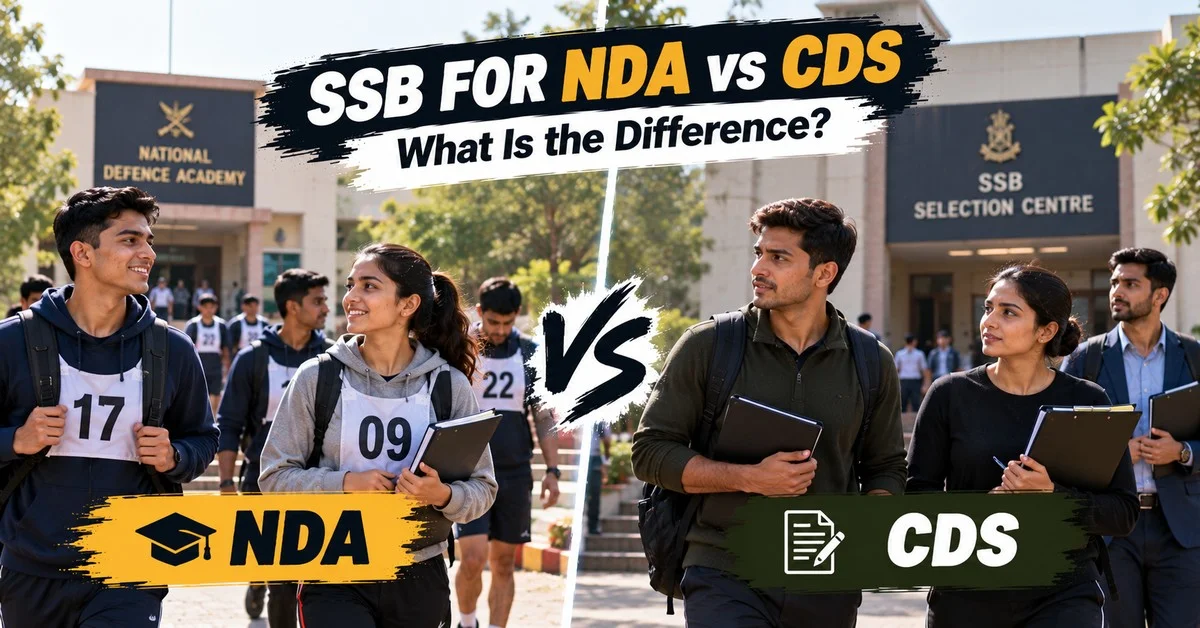
SSB for NDA vs CDS uses the identical 5-day format and the same tests, but the assessors aren't looking for the same thing from a 17-year-old and a 23-year-old graduate.
SSB for NDA vs CDS is the same 5-day process on paper, Screening, Psychological Tests, GTO Tasks, Personal Interview, and Conference, using the same OIR, PPDT, TAT, WAT, SRT, and GTO exercises for both. The real difference isn't the process itself; it's who walks in and what assessors expect from them. NDA candidates are 16.5 to 19.5 years old, straight out of Class 12, and are assessed for raw potential and trainability. CDS candidates are 19 to 25, mostly graduates, and are assessed for officer-like qualities they're expected to already have developed. Neither board is "harder"; the bar just moves to match the candidate profile.
Both NDA and CDS candidates sit the same SSB interview, run by the same service selection boards, using the same five-day structure and the same set of psychological and group testing tools.
What changes is the age and background of the person sitting across from the assessor, and that changes what "officer-like qualities" is actually being measured against.
This guide breaks down exactly where the NDA and CDS boards are identical, where they diverge, and how to prepare differently depending on which one you're walking into.
The SSB Process Itself: Identical for NDA and CDS
Whether you're an NDA or CDS candidate, this part doesn't change. Whether you're 17 or 23, you go through the same five days, the same test names, and the same board structure.
Where NDA and CDS Candidates Actually Differ
The process is identical; the people going through it aren't. This is where SSB for NDA vs CDS starts to diverge, before the interview even begins.
A 17-year-old NDA candidate and a 23-year-old CDS candidate walk into structurally identical rooms, but they don't walk in as the same kind of person, and the SSB accounts for that.
What Assessors Expect: NDA SSB vs CDS SSB
This is the part of SSB for NDA vs CDS that matters most for preparation, since it's not about the tests, it's about the standard you're held to inside them.
An NDA assessor is asking, "Can this person be trained into an officer over the next few years?" A CDS assessor is asking, "Is this person already close to being one?" Same TAT, same WAT, same GTO ground, different question behind every observation.
Is CDS SSB Tougher Than NDA SSB?
Neither is inherently tougher. Difficulty in SSB for NDA vs CDS comes down to how well an individual candidate performs against the expectations set for their profile, not which entry route they took.
A 17-year-old struggling to articulate a clear, mature Personal Interview answer isn't automatically at a disadvantage against a 23-year-old graduate, because the assessor isn't comparing the two against each other. Each candidate is measured against what's realistic for their age and background.
This is worth internalizing before Day 1, since a lot of anxiety around SSB comes from comparing yourself to the wrong benchmark. An NDA aspirant psyching themselves out over not sounding as composed as a CDS graduate is measuring against a standard that was never applied to them in the first place. The board recalibrates its expectations for every candidate group it interviews.
How to Prepare Differently for NDA SSB vs CDS SSB
-
NDA candidates should lean into genuine curiosity and teamwork in GTO tasks and interviews, rather than forcing a maturity or leadership tone that doesn't fit a 17-year-old's real experience.
-
CDS candidates should bring concrete examples of responsibility already taken, college projects led, jobs held, decisions made, since assessors expect demonstrated OLQs, not just potential.
-
Both should prepare the same core tests, OIR, PPDT, TAT, WAT, SRT, and GTO tasks, the content difference is in the depth and maturity of the responses, not the format.
-
NDA aspirants should focus PI preparation on self-awareness and adaptability; CDS aspirants should focus PI preparation on decision-making under real responsibility, since that's what's actually being probed in each case.
Want More SSB Preparation Like This? Join the Defence Study community on WhatsApp, Telegram, or Instagram for more SSB breakdowns, OLQ frameworks, and interview preparation content as it's published. Stay Informed. Stay Prepared. Stay Ready.
Bringing It Together
The NDA and CDS SSB is the same five-day process, the same tests, and the same boards, run for two very different kinds of candidates. NDA candidates are assessed for potential; CDS candidates are assessed for qualities they're expected to already show.
Preparing well means knowing which side of that line you're on, and preparing to be measured against the right standard, not the other one.
Frequently Asked Questions
Is the SSB interview different for NDA and CDS candidates? The process itself is identical, five days, the same OIR, PPDT, TAT, WAT, SRT, and GTO tasks, run by the same boards. What differs is the age and profile of the candidate and what assessors expect from them.
What is the age difference between NDA and CDS candidates in the SSB? NDA candidates are 16.5 to 19.5 years old and have passed Class 12. CDS candidates are 19 to 25 years old and are graduates or in their final year.
Is CDS SSB harder than NDA SSB? No. Neither is inherently harder. Each candidate is assessed against the expectations for their own age and profile, not against the other entry route.
Do NDA and CDS candidates take different psychological tests? No. Both go through the same TAT, WAT, SRT, and SDT tests, and the same GTO group tasks. The content of good answers differs based on what's realistic for the candidate's age and experience.
Should NDA and CDS aspirants prepare for the SSB differently? Yes, in emphasis. NDA aspirants should focus on genuine curiosity, adaptability, and teamwork. CDS aspirants should focus on demonstrating responsibility and decision-making they've already exercised, since that's the standard they're held to.